BURBERRY SALES UP
Fashion retailer Burberry has reported a 30% rise in revenues in the past six months, after enjoying strong growth in all of its markets.
Revenues at Burberry - best known for its red, black and camel check design - hit £830m for the six months to 30 September. Comparative retail sales - which ignore new store openings - rose 16%.
Burberry added that its Chinese stores had seen same-store sales growth of 30% in the past six months.
EU CHANGE CAP
The European Union has announced plans to reform its Common Agricultural Policy - its most expensive scheme, and one of the most controversial.
The CAP cost 58bn euros (£51bn; $80bn) last year - 47% of the whole EU budget.
The European Commission does not want to cut the budget, but change its priorities - including linking direct payments to environmental measures. But farming, environmental and taxpayer groups all have their own concerns about the plans.
UK UNEMPLOYMENT HITS 17 YEAR HIGH
UK unemployment rose by 114,000 between June and August to 2.57 million, a 17-year high, according to official figures.
The unemployment total for 16-24 year olds hit a record high of 991,000 in the quarter, a jobless rate of 21.3%.
The number of people out of work and claiming benefits rose 17,500 to 1.6 million in September.
Source: BBC Business News
Showing posts with label BBC News. Show all posts
Showing posts with label BBC News. Show all posts
Wednesday, 12 October 2011


Wednesday, 6 October 2010
In the News...
PRIUS SALES DOWN
Japanese sales of the Toyota Prius have fallen for the first time in almost a year-and-a-half after a government subsidy for buying more eco-friendly cars expired, industry figures suggest.
The hybrid remains the country's most popular car, with 27,249 sold in September, according the Japan Automobile Dealers Association.
But this was 14% lower than the same month a year ago - the first year-on-year fall in 17 months.
Honda's Fit was the second best-seller.
EASYJET MAKE A PROFIT
Shares in airline Easyjet have soared 10% after it said its full-year profits would be ahead of earlier expectations.
After stronger than predicted passenger numbers last month, it now expects its pre-tax profit for the 12 months to 30 September to surpass £150m.
This compares with its earlier guidance of between £100m and £150m.
VODAFONE JOBS LOST
Four hundred jobs are to go at a customer relations centre for mobile phone giant Vodafone in Oxfordshire.
The centre at Banbury Business Park in Adderbury will close in 2011.
Two hundred of the posts will move to other Vodafone sites at Newark in Nottinghamshire, Stoke-on-Trent in Staffordshire and Didsbury, Manchester.
A spokeswoman said the Banbury centre had a lot of little teams carrying out different tasks, but that Vodafone wanted "bigger, more specialist teams".
RYDER CUP 2014 SCOTS TOURISM BOOST
The 2014 Ryder Cup could raise more than £100m for Scotland's economy, organisers have said.
VisitScotland said the tournament was a chance to capitalise on what was sport's third biggest event in terms of TV and media coverage.
About 45,000 spectators are expected to attend each day of the six-day challenge at Gleneagles in Perthshire.
It will mark the first time in more than 40 years that the tournament has been played on Scottish soil.
Mike Cantlay, VisitScotland chairman, said: "The Ryder Cup will undoubtedly be a huge opportunity for Scotland to capitalise on an event that will showcase Scotland to a global audience and contribute many millions to both the local and national economy."
DELHI EMPTY SEATS CRISIS
Organisers of the Commonwealth Games in India are handing out free tickets to fill empty arenas.
TV pictures beamed around the world have shown competitors in virtually empty venues in Delhi.
Organisers told a news conference in the capital they hoped to increase attendance through a ticket giveaway to children and the underprivileged.
The vacant venues problem is the latest to hit the Delhi Games, preparations for which were plagued by setbacks.
Correspondents say the lack of spectators may be because it is not easy to buy tickets, although heavy security at the stadiums has also been a deterrent.
CARD FRAUD AT 10 YEAR LOW
Card fraud losses in the first six months of the year were at their lowest level for 10 years, at just £187m, the banking industry says.
Online banking fraud was 36% lower than in the first half of last year, at £25m, said the UK Cards Association.
Phone banking fraud was up 9% to £6m, but cheque fraud losses fell 13% to £14m.
The half-year figures follow the 28% drop in card fraud reported for the whole of 2009.
Source: BBC Business
Japanese sales of the Toyota Prius have fallen for the first time in almost a year-and-a-half after a government subsidy for buying more eco-friendly cars expired, industry figures suggest.
The hybrid remains the country's most popular car, with 27,249 sold in September, according the Japan Automobile Dealers Association.
But this was 14% lower than the same month a year ago - the first year-on-year fall in 17 months.
Honda's Fit was the second best-seller.
EASYJET MAKE A PROFIT
Shares in airline Easyjet have soared 10% after it said its full-year profits would be ahead of earlier expectations.
After stronger than predicted passenger numbers last month, it now expects its pre-tax profit for the 12 months to 30 September to surpass £150m.
This compares with its earlier guidance of between £100m and £150m.
VODAFONE JOBS LOST
Four hundred jobs are to go at a customer relations centre for mobile phone giant Vodafone in Oxfordshire.
The centre at Banbury Business Park in Adderbury will close in 2011.
Two hundred of the posts will move to other Vodafone sites at Newark in Nottinghamshire, Stoke-on-Trent in Staffordshire and Didsbury, Manchester.
A spokeswoman said the Banbury centre had a lot of little teams carrying out different tasks, but that Vodafone wanted "bigger, more specialist teams".
RYDER CUP 2014 SCOTS TOURISM BOOST
The 2014 Ryder Cup could raise more than £100m for Scotland's economy, organisers have said.
VisitScotland said the tournament was a chance to capitalise on what was sport's third biggest event in terms of TV and media coverage.
About 45,000 spectators are expected to attend each day of the six-day challenge at Gleneagles in Perthshire.
It will mark the first time in more than 40 years that the tournament has been played on Scottish soil.
Mike Cantlay, VisitScotland chairman, said: "The Ryder Cup will undoubtedly be a huge opportunity for Scotland to capitalise on an event that will showcase Scotland to a global audience and contribute many millions to both the local and national economy."
DELHI EMPTY SEATS CRISIS
Organisers of the Commonwealth Games in India are handing out free tickets to fill empty arenas.
TV pictures beamed around the world have shown competitors in virtually empty venues in Delhi.
Organisers told a news conference in the capital they hoped to increase attendance through a ticket giveaway to children and the underprivileged.
The vacant venues problem is the latest to hit the Delhi Games, preparations for which were plagued by setbacks.
Correspondents say the lack of spectators may be because it is not easy to buy tickets, although heavy security at the stadiums has also been a deterrent.
CARD FRAUD AT 10 YEAR LOW
Card fraud losses in the first six months of the year were at their lowest level for 10 years, at just £187m, the banking industry says.
Online banking fraud was 36% lower than in the first half of last year, at £25m, said the UK Cards Association.
Phone banking fraud was up 9% to £6m, but cheque fraud losses fell 13% to £14m.
The half-year figures follow the 28% drop in card fraud reported for the whole of 2009.
Source: BBC Business
Friday, 11 June 2010
In the News...
BP OIL SPILL WORSE THAN EXPECTED
As many as 40,000 barrels (1.7 million gallons) of oil a day may have been gushing out from a blown-out Gulf of Mexico well, doubling many estimates.
The US Geological Survey says that flow rate could have been reached before a cap was put on the well on 3 June.
BP's chairman has been asked to meet Barack Obama next week, amid assurances from the UK and US that bilateral ties will not be affected by the crisis.
UK PM David Cameron and President Obama will discuss the spill at the weekend.
Oil has been leaking into the Gulf since the Deepwater Horizon rig exploded on 20 April and sank off the coast of the US state of Louisiana, killing 11 workers.
JAPAN IN DANGER OF COLLAPSE
Japan is at "risk of collapse" under its huge debt mountain, the country's new prime minister has said.
Naoto Kan, in his first major speech since taking over, said Japan needed a financial restructuring to avert a Greece-style crisis.
"Our country's outstanding public debt is huge... our public finances have become the worst of any developed country," he said.
After years of borrowing, Japan's debt is twice its gross domestic product.
DUNDEE MP TRIES TO SAVE JOBS AT DC THOMSON
The MP for Dundee East, Stewart Hosie, is to meet the head of DC Thomson in an attempt to save 350 jobs.
The Dundee-based company, which publishes the Sunday Post, the Beano and the Dandy, is to shed the staff from its production and printing division.
It has said the cuts were necessary to protect the firm's future.
Mr Hosie will meet chief executive Andrew Thomson on Friday afternoon to discuss the proposed cuts.
The proposed closure is at a printing and book-binding centre in the city's Guthrie Street.
BRITONS WORK WITHOUT A BREAK
One in four people in the UK often works all day without taking a break, a survey suggests.
More than half of the 3,000 people polled by the Chartered Society of Physiotherapists said they went to work when feeling unwell or stressed.
Staff shortages were cited as a cause of stress and why breaks were skipped.
While work can contribute to people's mental and physical well-being, overworking can lead to health problems, the CSP warned.
O2 SCRAPS UNLIMITED DOWNLOADS
UK phone network O2 has scrapped unlimited data downloads for smartphone customers.
All new and upgrading customers will have their usage capped at between 500 Megabytes (MB) and one gigabyte (GB) depending on their monthly tariff.
Analysts said the move was "inevitable" as more and more consumers switch to data-intensive smartphones that can surf the web and show video.
Other networks are likely to follow O2, they said.
"O2 had become the industry poster-child of the capacity crunch era," said Thomas Wehmeier, principal analyst at Informa Telecoms and Media.
Many customers have complained about poor service, download speeds and network coverage.
"It is a victim of its own success - O2 has had so many people sign up for data intensive phones, like the iPhone," Ben Wood of research firm CCS Insight told BBC News.
"Huge amounts of data are consumed by the minority of people."
Source: BBC News
As many as 40,000 barrels (1.7 million gallons) of oil a day may have been gushing out from a blown-out Gulf of Mexico well, doubling many estimates.
The US Geological Survey says that flow rate could have been reached before a cap was put on the well on 3 June.
BP's chairman has been asked to meet Barack Obama next week, amid assurances from the UK and US that bilateral ties will not be affected by the crisis.
UK PM David Cameron and President Obama will discuss the spill at the weekend.
Oil has been leaking into the Gulf since the Deepwater Horizon rig exploded on 20 April and sank off the coast of the US state of Louisiana, killing 11 workers.
JAPAN IN DANGER OF COLLAPSE
Japan is at "risk of collapse" under its huge debt mountain, the country's new prime minister has said.
Naoto Kan, in his first major speech since taking over, said Japan needed a financial restructuring to avert a Greece-style crisis.
"Our country's outstanding public debt is huge... our public finances have become the worst of any developed country," he said.
After years of borrowing, Japan's debt is twice its gross domestic product.
DUNDEE MP TRIES TO SAVE JOBS AT DC THOMSON
The MP for Dundee East, Stewart Hosie, is to meet the head of DC Thomson in an attempt to save 350 jobs.
The Dundee-based company, which publishes the Sunday Post, the Beano and the Dandy, is to shed the staff from its production and printing division.
It has said the cuts were necessary to protect the firm's future.
Mr Hosie will meet chief executive Andrew Thomson on Friday afternoon to discuss the proposed cuts.
The proposed closure is at a printing and book-binding centre in the city's Guthrie Street.
BRITONS WORK WITHOUT A BREAK
One in four people in the UK often works all day without taking a break, a survey suggests.
More than half of the 3,000 people polled by the Chartered Society of Physiotherapists said they went to work when feeling unwell or stressed.
Staff shortages were cited as a cause of stress and why breaks were skipped.
While work can contribute to people's mental and physical well-being, overworking can lead to health problems, the CSP warned.
O2 SCRAPS UNLIMITED DOWNLOADS
UK phone network O2 has scrapped unlimited data downloads for smartphone customers.
All new and upgrading customers will have their usage capped at between 500 Megabytes (MB) and one gigabyte (GB) depending on their monthly tariff.
Analysts said the move was "inevitable" as more and more consumers switch to data-intensive smartphones that can surf the web and show video.
Other networks are likely to follow O2, they said.
"O2 had become the industry poster-child of the capacity crunch era," said Thomas Wehmeier, principal analyst at Informa Telecoms and Media.
Many customers have complained about poor service, download speeds and network coverage.
"It is a victim of its own success - O2 has had so many people sign up for data intensive phones, like the iPhone," Ben Wood of research firm CCS Insight told BBC News.
"Huge amounts of data are consumed by the minority of people."
Source: BBC News
Tuesday, 5 January 2010
In the News...
CHINA MANUFACTURING GROWING
Chinese manufacturing grew by the biggest margin in five years in December, fuelling growth expectations for the world's third-biggest economy.
The purchasing managers index (PMI) from HSBC Holdings and Markit Economics reported the fastest rate of growth since records began in 2004.
The index is based on a survey of more than 400 Chinese manufacturers.
The finding supports the view among some economists that China's economy could grow by as much as 10% this year.
ICELAND VOTE ON BANKS
Iceland's president has announced plans to hold a referendum on the payment of compensation resulting from the collapse of the country's banks.
President Olafur Ragnar Grimmson said he would not sign a controversial bill to repay $5bn lost by UK and Dutch savers in Icesave accounts.
The government has seen strong domestic opposition to the bill.
The Landsbanki bank, which ran the Icesave accounts, collapsed at the height of the banking crisis in 2008.
The money would have gone to the UK and Dutch governments who compensated Icesave holders following the collapse.
BONO CAUSES A NET STORM
Bono, frontman of rock band U2, has warned the film industry not to make the same mistakes with file-sharing that have dogged the music industry.
Writing for the New York Times, Bono claimed internet service providers were "reverse Robin Hoods" benefiting from the music industry's lost profits.
He hinted that China's efforts prove that tracking net content is possible.
The editorial drew sharp criticism, both on its economic merits and for the suggestion of net content policing.
AUSTRALIA UNEMPLOYMENT RATE DOWN
Australia's unemployment rate fell unexpectedly in November, as the country's economic recovery continued.
The jobless rate dropped to 5.7% last month, from 5.8% in October, as 30,800 new full-time jobs were created, said the Australian Bureau of Statistics.
The figure surprised analysts, who had been expecting the unemployment rate to increase in November to 5.9%.
The latest figures raise the prospect that Australia will increase interest rates again.
Earlier this month, the Reserve Bank of Australia increased interest rates to 3.75% from 3.5% - the third month in succession that it had increased the price of borrowing.
Australia was also the first major economy to raise interest rates since the outbreak of the global financial crisis.
GOOGLE LOSES OUT TO CANADIANS
A Canadian company behind a search engine called Groovle.com has won a case filed against it by online search giant Google.
Google said the domain name used by the small business, 207 Media, was too similar to its own, but mediators the National Arbitration Forum disagreed.
In the complaint, Google asked for the judges to rule that 207 Media transfer the domain name over to it.
But three judges appointed by the forum refused the request.
They said the name was not similar enough to confuse people and the word 'groovle' was more closely linked to "groovy" or "groove" rather than Google.
SOURCE: BBC NEWS
Chinese manufacturing grew by the biggest margin in five years in December, fuelling growth expectations for the world's third-biggest economy.
The purchasing managers index (PMI) from HSBC Holdings and Markit Economics reported the fastest rate of growth since records began in 2004.
The index is based on a survey of more than 400 Chinese manufacturers.
The finding supports the view among some economists that China's economy could grow by as much as 10% this year.
ICELAND VOTE ON BANKS
Iceland's president has announced plans to hold a referendum on the payment of compensation resulting from the collapse of the country's banks.
President Olafur Ragnar Grimmson said he would not sign a controversial bill to repay $5bn lost by UK and Dutch savers in Icesave accounts.
The government has seen strong domestic opposition to the bill.
The Landsbanki bank, which ran the Icesave accounts, collapsed at the height of the banking crisis in 2008.
The money would have gone to the UK and Dutch governments who compensated Icesave holders following the collapse.
BONO CAUSES A NET STORM
Bono, frontman of rock band U2, has warned the film industry not to make the same mistakes with file-sharing that have dogged the music industry.
Writing for the New York Times, Bono claimed internet service providers were "reverse Robin Hoods" benefiting from the music industry's lost profits.
He hinted that China's efforts prove that tracking net content is possible.
The editorial drew sharp criticism, both on its economic merits and for the suggestion of net content policing.
AUSTRALIA UNEMPLOYMENT RATE DOWN
Australia's unemployment rate fell unexpectedly in November, as the country's economic recovery continued.
The jobless rate dropped to 5.7% last month, from 5.8% in October, as 30,800 new full-time jobs were created, said the Australian Bureau of Statistics.
The figure surprised analysts, who had been expecting the unemployment rate to increase in November to 5.9%.
The latest figures raise the prospect that Australia will increase interest rates again.
Earlier this month, the Reserve Bank of Australia increased interest rates to 3.75% from 3.5% - the third month in succession that it had increased the price of borrowing.
Australia was also the first major economy to raise interest rates since the outbreak of the global financial crisis.
GOOGLE LOSES OUT TO CANADIANS
A Canadian company behind a search engine called Groovle.com has won a case filed against it by online search giant Google.
Google said the domain name used by the small business, 207 Media, was too similar to its own, but mediators the National Arbitration Forum disagreed.
In the complaint, Google asked for the judges to rule that 207 Media transfer the domain name over to it.
But three judges appointed by the forum refused the request.
They said the name was not similar enough to confuse people and the word 'groovle' was more closely linked to "groovy" or "groove" rather than Google.
SOURCE: BBC NEWS
Saturday, 12 December 2009
In the News...
UK GO SLOW ON BROADBAND
The UK is trailing when it comes to next-generation access, new figures show.
According to the Organisation for Economic Co-operation and Development (OECD), the UK is placed 21st out of 30 in terms of speed.
That puts it below countries such as Greece, Portugal and Spain. The report suggests that countries that invest in fibre networks are likely to see the best economic returns in other areas.
When it comes to broadband penetration, the UK is doing ok - placed 13th out of the 30 OECD members. But most of these subscribers still access broadband via so-called DSL (Digital Subscriber Line) rather than via fibre.
NOKIA v APPLE COLD WAR TURNS HOT
The legal battle between Finland's Nokia and its US rival Apple has taken a new turn, with Apple countersuing Nokia over alleged patent violations.
The move follows a Nokia lawsuit filed in October accusing iPhone maker Apple of 10 Nokia patent infringements. Now Apple, in turn, is claiming that the Finnish phone firm is infringing 13 of its technology patents.
"Other companies must compete with us by inventing their own technologies, not just by stealing ours," Apple said.
Apple has not yet revealed which patents are at issue. Nokia was unavailable for comment.
In October, Nokia said it had not been compensated for its technology, and accused Apple of "trying to get a free ride on the back of Nokia's innovation".
The 10 alleged patent infringements by Apple involve wireless data, speech coding, security and encryption.
SHELL AND PETRONAS TEAM UP
A joint venture between the UK's Shell and Malaysia's Petronas oil companies has won the right to develop Iraq's giant Majnoon oil field.
A total of 44 companies took part in a bid for 10 fields in the second such auction since the invasion in 2003. Shell and Petronas beat a rival bid from France's Total and China's CNPC.
Although Majnoon is a huge oil field, with reserves of 13 billion barrels of oil, it currently produces just 46,000 barrels per day.
Shell and Petronas have pledged to increase that output to 1.8 million barrels per day.
UK FACTORY PRICES RISE
The cost of materials and fuels bought by UK factories rose at their fastest annual pace in a year in November.
Input prices gained by 4% last month from November 2008, and by 0.4% from October.
Output prices - the prices of goods leaving UK factories - rose 2.9% on the year, the fastest pace since February.
The numbers suggest that inflation is set to rise in the short term, however, most economists do not expect any increase to persist for long.
"The time lags involved mean that this is unlikely to have much of a bearing on High Street inflation for some time yet," said Vicky Redwood, an economist at Capital Economics.
The annual inflation figures "are likely to increase further over the coming months, as last year's big energy-driven drops in costs fall out of the annual comparison. But the rise should be short-lived."
SOURCE: BBC Business News
The UK is trailing when it comes to next-generation access, new figures show.
According to the Organisation for Economic Co-operation and Development (OECD), the UK is placed 21st out of 30 in terms of speed.
That puts it below countries such as Greece, Portugal and Spain. The report suggests that countries that invest in fibre networks are likely to see the best economic returns in other areas.
When it comes to broadband penetration, the UK is doing ok - placed 13th out of the 30 OECD members. But most of these subscribers still access broadband via so-called DSL (Digital Subscriber Line) rather than via fibre.
NOKIA v APPLE COLD WAR TURNS HOT
The legal battle between Finland's Nokia and its US rival Apple has taken a new turn, with Apple countersuing Nokia over alleged patent violations.
The move follows a Nokia lawsuit filed in October accusing iPhone maker Apple of 10 Nokia patent infringements. Now Apple, in turn, is claiming that the Finnish phone firm is infringing 13 of its technology patents.
"Other companies must compete with us by inventing their own technologies, not just by stealing ours," Apple said.
Apple has not yet revealed which patents are at issue. Nokia was unavailable for comment.
In October, Nokia said it had not been compensated for its technology, and accused Apple of "trying to get a free ride on the back of Nokia's innovation".
The 10 alleged patent infringements by Apple involve wireless data, speech coding, security and encryption.
SHELL AND PETRONAS TEAM UP
A joint venture between the UK's Shell and Malaysia's Petronas oil companies has won the right to develop Iraq's giant Majnoon oil field.
A total of 44 companies took part in a bid for 10 fields in the second such auction since the invasion in 2003. Shell and Petronas beat a rival bid from France's Total and China's CNPC.
Although Majnoon is a huge oil field, with reserves of 13 billion barrels of oil, it currently produces just 46,000 barrels per day.
Shell and Petronas have pledged to increase that output to 1.8 million barrels per day.
UK FACTORY PRICES RISE
The cost of materials and fuels bought by UK factories rose at their fastest annual pace in a year in November.
Input prices gained by 4% last month from November 2008, and by 0.4% from October.
Output prices - the prices of goods leaving UK factories - rose 2.9% on the year, the fastest pace since February.
The numbers suggest that inflation is set to rise in the short term, however, most economists do not expect any increase to persist for long.
"The time lags involved mean that this is unlikely to have much of a bearing on High Street inflation for some time yet," said Vicky Redwood, an economist at Capital Economics.
The annual inflation figures "are likely to increase further over the coming months, as last year's big energy-driven drops in costs fall out of the annual comparison. But the rise should be short-lived."
SOURCE: BBC Business News
Friday, 27 November 2009
In the News...
BORDERS GOES BUST
The Borders bookshop chain in the UK has gone into administration.
Administrators MCR said all 45 Borders and Books Etc stores would remain open while it sought a buyer for all or some of the outlets.
Borders has suffered from increased competition from online retailers and supermarkets, and its website recently stopped taking new book orders.
DUBAI DEBT CAUSES WOBBLE
European shares have been hit by concerns over Dubai's financial health, after a government-owned company asked for an extension on repaying its debts.
The UK's FTSE 100 index lost 3.2%, its biggest one-day fall since March, after Dubai World asked creditors to postpone upcoming repayments until May 2010.
Banks were hit particularly hard on concerns over Dubai's ability to pay back its debts.
Share indexes, however, are trading at their highest levels for over a year.
JAPAN COMING OUT OF RECESSION?
Japan's exports fell at their slowest annual rate in a year in October, providing further evidence of the country's emergence from recession.
Exports from the world's second largest economy totalled 5.3tn yen ($60bn; $36bn), a fall of 23.2% from the same month a year earlier.
The main reason for the improvement was higher demand in Asia, analysts said.
Last week, Japan posted figures showing it had grown between July and September for the second straight quarter.
TESCO AND i-PHONE TEAM UP
Supermarket giant Tesco has joined a growing number of UK firms offering Apple's popular iPhone.
A spokesperson for the firm said that it hoped to offer the phone "in time for Christmas".
Although Tesco has not revealed tariffs, the spokesperson said that its prices were "competitive".
In September, it was revealed that O2 had lost its exclusive deal to sell the phone, which had been in place since its launch in 2007.
Both Vodafone and Orange have signed deals to sell the phone.
CHINA TO GO GREEN?
China has unveiled its first firm target for limiting greenhouse gas emissions, two weeks before a global summit on climate change in Copenhagen.
Beijing said it would aim to reduce its "carbon intensity" by 40-45% by the year 2020, compared with 2005 levels.
Carbon intensity, China's preferred measurement, is the amount of carbon dioxide emitted for each unit of GDP.
AND FINALLY...
The US Secret Service is investigating reports that a couple gatecrashed Tuesday night's state dinner at the White House, US media say.
Tareq and Michaele Salahi were reportedly not invited but later posted photos of themselves on Facebook.
Secret Service spokesman Ed Donovan said the pair were screened and the president was never in any danger, but former FBI agent Brad Garrett described the incident as a "real concern."
The Washington Post described the Salahis as "polo-playing socialites" with Ms Salahi said to be on the cast of the Real Housewives of Washington television programme.
SOURCE: BBC NEWS
The Borders bookshop chain in the UK has gone into administration.
Administrators MCR said all 45 Borders and Books Etc stores would remain open while it sought a buyer for all or some of the outlets.
Borders has suffered from increased competition from online retailers and supermarkets, and its website recently stopped taking new book orders.
DUBAI DEBT CAUSES WOBBLE
European shares have been hit by concerns over Dubai's financial health, after a government-owned company asked for an extension on repaying its debts.
The UK's FTSE 100 index lost 3.2%, its biggest one-day fall since March, after Dubai World asked creditors to postpone upcoming repayments until May 2010.
Banks were hit particularly hard on concerns over Dubai's ability to pay back its debts.
Share indexes, however, are trading at their highest levels for over a year.
JAPAN COMING OUT OF RECESSION?
Japan's exports fell at their slowest annual rate in a year in October, providing further evidence of the country's emergence from recession.
Exports from the world's second largest economy totalled 5.3tn yen ($60bn; $36bn), a fall of 23.2% from the same month a year earlier.
The main reason for the improvement was higher demand in Asia, analysts said.
Last week, Japan posted figures showing it had grown between July and September for the second straight quarter.
TESCO AND i-PHONE TEAM UP
Supermarket giant Tesco has joined a growing number of UK firms offering Apple's popular iPhone.
A spokesperson for the firm said that it hoped to offer the phone "in time for Christmas".
Although Tesco has not revealed tariffs, the spokesperson said that its prices were "competitive".
In September, it was revealed that O2 had lost its exclusive deal to sell the phone, which had been in place since its launch in 2007.
Both Vodafone and Orange have signed deals to sell the phone.
CHINA TO GO GREEN?
China has unveiled its first firm target for limiting greenhouse gas emissions, two weeks before a global summit on climate change in Copenhagen.
Beijing said it would aim to reduce its "carbon intensity" by 40-45% by the year 2020, compared with 2005 levels.
Carbon intensity, China's preferred measurement, is the amount of carbon dioxide emitted for each unit of GDP.
AND FINALLY...
The US Secret Service is investigating reports that a couple gatecrashed Tuesday night's state dinner at the White House, US media say.
Tareq and Michaele Salahi were reportedly not invited but later posted photos of themselves on Facebook.
Secret Service spokesman Ed Donovan said the pair were screened and the president was never in any danger, but former FBI agent Brad Garrett described the incident as a "real concern."
The Washington Post described the Salahis as "polo-playing socialites" with Ms Salahi said to be on the cast of the Real Housewives of Washington television programme.
SOURCE: BBC NEWS
Monday, 9 November 2009
Brazil to be a major player by 2026!

From BBC News:
Brazil has often been derided as the eternal country of the future. But now, it seems, that future has a date: 2026.
Brazil is stronger than before it went into recession, says Guido Mantega
At present, Brazil is the fifth-largest country in the world and has the fifth-largest population as well.
But in 17 years' time, it will also be the fifth-largest economy in the world, says its finance minister, Guido Mantega.
"These figures are from the Economist Intelligence Unit," he told an audience of businessmen and journalists in London.
As he spoke, a slide showing a series of league tables outlined exactly how Brazil is expected to achieve this.
According to these projections, it will leapfrog the UK, France and Italy as early as 2011, before reaching the number five slot in 2026 with a gross domestic product of $5.721tn in purchasing power parity terms.
"If we took the World Bank figures, we would already be in fifth place in 2014," he said.
"We were more modest and took statistics that put us there in 2026, when China will already be the number one world economy."
This is interesting in that Rio has been awarded the Olympics for 2016 and the World Cup is going to Brazil in 2014. This means that Brazil's international profile will be huge for basically most of the upcoming decade. Investment in Brazil's infrastructure and economy will surely have a knock-on effect on the living conditions of some of the deprived people living in favellas.
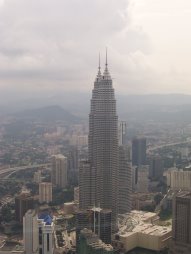
The positive aspect of a nation having a vision is crucial. I remember how Malaysia ran the 2020 project which aims for that South East Asian nation to become a member of the developed world and helped Kuala Lumpur win the 1998 Commonwealth Games and built the Petronas Twin Towers and the Menara KL Tower. KL is a bustling, booming city. One of the jewels of the Far East.
Brazil and Rio are perhaps aiming to be the first true South American global player. A continent rich in natural deposits has for too long been exploited by the West and Multinational corporations at the expense of the local people.
Hopefully if Brazil does see its economy grow they will also feel the weight of world responsibility to protect the Amazonian rainforest and all the important species of plants, animals and birdlife that live in that ecosphere. Conservation of the Amazon is hugely important to the future of the planet. So we all have an interest in the future of Brazil.
Study Points:
- What are the future implications of large nations such as Brazil, China and India becoming heavily industrialised by the early 21st century?
- What are the benefits to Brazil of hosting the 2016 Olympics and 2014 World Cup?
- How can the International Community help Brazil save the rainforest?
Subscribe to:
Posts (Atom)