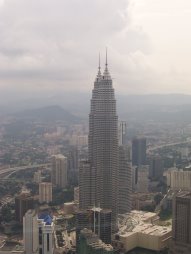
Looks like it is not just Australia that Chinese firms are investing in.
Chinese foreign direct investment in the United States hit record levels in 2012 and shows little sign of slowing, despite lingering worries among some that the inflow of Chinese money presents a growing security risk to the country.
Chinese companies concluded deals worth $6.5 billion in 2012, an increase of 12 percent from the record $5.8 billion in 2010, according to a new report by New York-based Rhodium Group, which tracks Chinese FDI.
The most appealing US sectors to Chinese investors were oil and gas exploration, advanced manufacturing that helps Chinese firms move up the value chain, and assets that allow investors to gain solid returns such as utilities, real estate and hospitality.
Source: China Daily News
Showing posts with label Investment. Show all posts
Showing posts with label Investment. Show all posts
Tuesday, 1 January 2013


Sunday, 27 November 2011
Scottish independence vote may damage investment
The planned independence referendum is an additional risk that adds to the costs of investing in Scotland, it has been claimed.
The warning comes from Malcolm Naish, who stepped down as chairman of the Scottish Property Federation last week.
He said investors would hold off on decisions until there was more clarity about Scotland's political future.
The Scottish government has called for critics to provide examples of those investors who are cautious.
Mr Naish also warned against moves by the Scottish government to increase tax on supermarkets and to remove rebates on commercial properties that are lying empty.
The comments add to the concerns raised about renewable power investment in Scotland by energy analysts at Citigroup, later contested by a rival analyst.
There have also been claims from the Chancellor, George Osborne, and by Danny Alexander, the Treasury Secretary, that investors are being put off investment by uncertainty over Scotland's constitutional future.
Source: BBC Business News
For the full article read here:
http://www.bbc.co.uk/news/uk-scotland-scotland-business-15908948
Friday, 25 September 2009
Asian Tiger Economies
The boom in Asian markets over the last 15 years or so is hopefully an inspiration for the economies of Africa and Latin America.
India is also beginning to take off in quite dramatic fashion, following to some extent the rapid boom in China.
However, historically the 'Tiger' Economies refers to Hong Kong, South Korea, Taiwan, Malaysia, and Singapore.
Hong Kong was the model that has been duplicated by the rest. It is interesting to note that in Hong Kong, Singapore and Malaysia, Britain governed them before independence. The trade links and contacts utilised by the UK is probably the main reason for this and not some old Imperialist propaganda! It is also important to recognise the large Chinese populations in these nations or the influence China has had on their indigenous culture.
The reasons for the growth of these nations have been many. It is often reckoned that:
They have specialised in either Financial Investment or Information Technology.
South Korea is the world's largest shipbuilder and from the ashes of the Korean War they have created global multinationals such as Samsung, Hyundai and Daewoo, all permanent rivals of their more illustrious Japanese counterparts.
What are the future implications for the EU? Or for the USA? Or even Japan, who for so long has been the Asian economic superpower, but after the 90s and deflation, Japan may find it hard to regain its omnipotence.
These traditional Asian Tigers along with the likes of Thailand, rely heavily on exports. With the world currently in recession, fewer goods are being shipped abroad to the Western consumers who buy these goods due to their technical brilliance, and more often than not, their low price.
Many of the Tigers relied on Tourism also, but again more and more people are staying at home (incidentally, this factor is reported as having boosted our own Halfords company in the UK as more people bought camping equipment and bikes rather than jetsetting off across the globe), but where does it leave the Tiger economies?
It will be fascinating to watch African and Latin American nations who do not have vast natural resources trying to emulate the Asian Tigers. Whereas the other developing nations who do have vast natural resources may opt for the route that the likes of Dubai are going down by using their current wealth to prepare for the days when the oil runs out.
If we are to summarise the emergence of the Tigers it really is down to their committment to low cost and good quality.
India is also beginning to take off in quite dramatic fashion, following to some extent the rapid boom in China.
However, historically the 'Tiger' Economies refers to Hong Kong, South Korea, Taiwan, Malaysia, and Singapore.
Hong Kong was the model that has been duplicated by the rest. It is interesting to note that in Hong Kong, Singapore and Malaysia, Britain governed them before independence. The trade links and contacts utilised by the UK is probably the main reason for this and not some old Imperialist propaganda! It is also important to recognise the large Chinese populations in these nations or the influence China has had on their indigenous culture.
The reasons for the growth of these nations have been many. It is often reckoned that:
- low Government spending has also encouraged high investment from overseas
- an emphasis on creating skilled workers in place of a reliance on natural resources
- excellent labour relations between employees and owners
- having a 'can-do' philosophy
- focusing on emerging markets and technologies
- adopting Japanese Production Methods
They have specialised in either Financial Investment or Information Technology.
South Korea is the world's largest shipbuilder and from the ashes of the Korean War they have created global multinationals such as Samsung, Hyundai and Daewoo, all permanent rivals of their more illustrious Japanese counterparts.
What are the future implications for the EU? Or for the USA? Or even Japan, who for so long has been the Asian economic superpower, but after the 90s and deflation, Japan may find it hard to regain its omnipotence.
These traditional Asian Tigers along with the likes of Thailand, rely heavily on exports. With the world currently in recession, fewer goods are being shipped abroad to the Western consumers who buy these goods due to their technical brilliance, and more often than not, their low price.
Many of the Tigers relied on Tourism also, but again more and more people are staying at home (incidentally, this factor is reported as having boosted our own Halfords company in the UK as more people bought camping equipment and bikes rather than jetsetting off across the globe), but where does it leave the Tiger economies?
It will be fascinating to watch African and Latin American nations who do not have vast natural resources trying to emulate the Asian Tigers. Whereas the other developing nations who do have vast natural resources may opt for the route that the likes of Dubai are going down by using their current wealth to prepare for the days when the oil runs out.
If we are to summarise the emergence of the Tigers it really is down to their committment to low cost and good quality.
Subscribe to:
Posts (Atom)