Wednesday, 28 March 2012
James Cameron Dives to Deepest Part of the Ocean Inside the Mariana Trench
Film-maker James Cameron's exploration to the bottom of the Pacific Ocean.


New product development - China straddling bus
A great inventive idea by Chinese engineers in order to solve traffic congestion.
Wednesday, 21 March 2012
STEM Ambassador Event

Tuesday, 20 March 2012

Monday, 19 March 2012
New Business Travel Blog
I have done a fair bit of globetrotting over the last 7 years and I have made full use of the time to visit some interesting locations for Business Education.
I have decided to post pictures, text and business information about my travels on a new blog:
http://mrmcgowanbusinesstravel.blogspot.co.uk/
Hoepfully it will help students and learners see real life industry in action.
I have decided to post pictures, text and business information about my travels on a new blog:
http://mrmcgowanbusinesstravel.blogspot.co.uk/
Hoepfully it will help students and learners see real life industry in action.
Saturday, 17 March 2012
SBEA Mini Conference
Delivering podcasting workshop to delegates.
Adam Stevenson from SQA spoke about the new qualifications. Great news for Higher Admin & Business Mgt that assignments are now going to be included.
Sent from my iPhone
Adam Stevenson from SQA spoke about the new qualifications. Great news for Higher Admin & Business Mgt that assignments are now going to be included.
Sent from my iPhone
Thursday, 15 March 2012
Mock Interviews
Senior pupils underwent mock interviews today as part of enrichment and NPA Enterprise & Employability.
Our interviewers were employers from a range of industries and put our young people through their paces.
Feedback was highly positive, and the vast majority of pupils enjoyed the process. As Helen Salt said: "it's better to make mistakes in a mock interview than in a real one".
Our next step is to aim high and try conduct a whole year group mock interview event.
The more experience our pupils can get the better!
Sent from my iPhone
Our interviewers were employers from a range of industries and put our young people through their paces.
Feedback was highly positive, and the vast majority of pupils enjoyed the process. As Helen Salt said: "it's better to make mistakes in a mock interview than in a real one".
Our next step is to aim high and try conduct a whole year group mock interview event.
The more experience our pupils can get the better!
Sent from my iPhone
Wednesday, 14 March 2012


Tuesday, 13 March 2012
Monday, 27 February 2012
Scottish firms lead the way in conquering the US coach market
Planes were often the best way to travel in the USA. Coaches were frowned upon and the iconic Greyhound bus was often viewed as the method of transport for those running away!
Before that it was the railways that moved passengers coast to coast until 1910 when America became the land of the automobile thanks to Henry Ford.
However, the bus is making a comeback and Scottish firms are at the heart of it. Stagecoach bought out Coach USA some years back and now have a vast empire of famous yellow school buses, commuter buses, sightseeing buses and intercity buses. Stagecoach launched Megabus in the US in 2006, expanding rapidly to serve 72 major cities from hubs in Chicago and New York.
Another Scottish bus company, FirstGroup, bought over US firm Laidlaw in 2007 for $2.8bn (£1.78bn), giving it control of the 92-year-old Greyhound bus line. They launched BoltBus in 2008, initially going head-to-head with Megabus on the key New York to Washington route.
According to a new survey by DePaul University Inter-city bus travel grew by 7.1% in 2011, compared with 1.5% for air and 1.16% for rail.
PUBLIC BUS PASSENGER TRIPS IN THE US
New York - 3.2 bn
Chicago - 0.52 bn
Los Angeles - 0.48 bn
Washington DC - 0.44 bn
Boston - 0.37 bn
So how have they been so successful?
Stagecoach and FirstGroup offer tickets between major cities such as New York and Philadelphia, or Boston and Washington, for as little as $1 (63p), with typical one-way fares between $15 (£9.53) and $27 (£17.07).
They also offer free wi-fi and pick up passengers on the kerbside - rather than grotty old bus terminals has helped them become popular with more affluent passengers and lone female passengers.
The bus companies highlight the green benefits of buses, which have a lower carbon dioxide footprint than air or car travel.
US firms such as DC2NY are starting to offer similar services, but although travelers going between Washington DC and New York pay lower fares than rail or air travellers, the journey is at least an hour slower than the slowest train.
Further Reading here:
http://www.bbc.co.uk/news/magazine-16881957
Before that it was the railways that moved passengers coast to coast until 1910 when America became the land of the automobile thanks to Henry Ford.
However, the bus is making a comeback and Scottish firms are at the heart of it. Stagecoach bought out Coach USA some years back and now have a vast empire of famous yellow school buses, commuter buses, sightseeing buses and intercity buses. Stagecoach launched Megabus in the US in 2006, expanding rapidly to serve 72 major cities from hubs in Chicago and New York.
Another Scottish bus company, FirstGroup, bought over US firm Laidlaw in 2007 for $2.8bn (£1.78bn), giving it control of the 92-year-old Greyhound bus line. They launched BoltBus in 2008, initially going head-to-head with Megabus on the key New York to Washington route.
According to a new survey by DePaul University Inter-city bus travel grew by 7.1% in 2011, compared with 1.5% for air and 1.16% for rail.
PUBLIC BUS PASSENGER TRIPS IN THE US
New York - 3.2 bn
Chicago - 0.52 bn
Los Angeles - 0.48 bn
Washington DC - 0.44 bn
Boston - 0.37 bn
So how have they been so successful?
Stagecoach and FirstGroup offer tickets between major cities such as New York and Philadelphia, or Boston and Washington, for as little as $1 (63p), with typical one-way fares between $15 (£9.53) and $27 (£17.07).
They also offer free wi-fi and pick up passengers on the kerbside - rather than grotty old bus terminals has helped them become popular with more affluent passengers and lone female passengers.
The bus companies highlight the green benefits of buses, which have a lower carbon dioxide footprint than air or car travel.
US firms such as DC2NY are starting to offer similar services, but although travelers going between Washington DC and New York pay lower fares than rail or air travellers, the journey is at least an hour slower than the slowest train.
Further Reading here:
http://www.bbc.co.uk/news/magazine-16881957
Saturday, 4 February 2012
Gas supplies shortage in Europe
Freezing weather sweeping across Europe has led to a shortage of vital Russian gas supplies to several countries, officials say.
An EU energy spokeswoman said eight countries had seen a reduction in gas due to increased demand in Russia.
She said the situation was not an emergency but was being monitored.
The cold snap is being blamed for scores of deaths in eastern Europe where temperatures have plunged to below -35C.
BT cuts costs
Telecoms group BT has reported a rise in profits, thanks to cost-cutting and an increase in broadband users.
Pre-tax profits for the three months to the end of December were £652m, 48% higher than a year earlier. Revenue fell 5% to £4.77bn.
Excluding one-off items, profits increased by 18%.
The company said it had expanded the availability of its fibre-optic broadband to seven million homes and signed up 95,000 customers to it.
US jobs boost
The US economy created 243,000 jobs in January, the highest total for nine months, official figures show.
The rise was much more than expected. Analysts had forecast an increase of about 150,000 jobs.
The unemployment rate dropped to 8.3%, which was the lowest rate in nearly three years, and down from a revised rate of 8.5% in December.
News of the jobs growth caused shares to rocket up, with the Dow Jones index up 156 points at 12,862, its highest level since May 2008.
The Nasdaq index, which specialises in technology companies, soared to its highest level since December 2000 by the close of trading on Friday.
In Europe, the FTSE 100 index hit its highest level since July 2011 rising 1.8% while Germany's Dax closed up 1.6%. The Cac 40 in France was 1.5% higher.
Global Warming... Fact or Fiction?
I do not know what to believe!
Al Gore made a good case for Global Warming in the documentary "An Inconvenient Truth" which really made everyone think.
But now and again there are many experts and scientists who do not believe it at all.
James Delingpole is one such critic of the automatic acceptance of global warming.
and this one here:
What concerns me is that perhaps we are all the victims of stealth tax. What better way to bleed more money out of the poor consumer by making them feel guilty about the damage we are doing to the environment.
I do wish they would publish figures one way or the other and settle this once and for all. If global warming is real and caused by man then let's do something now, but at the same time not at the expense of people living just now. There has to be smarter ways to save the planet by using technology rather than just taxing everyone.
I would love to hear comments and data from people who actually know what they are talking about as we only read or see snippets and information that has been tarnished with propaganda!
Tell us the truth. Please.
Is independence the priority right now?
With the future of Scotland potentially at stake with the upcoming referendum over the break-up of the United Kingdom, who would get the oil in the North Sea?
95% of the oil the UK drills is on Scottish water, but it would be unlikely that Scotland would get it keep all of the revenues as UK money has been spent on machinery, equipment and research.
Plus when the oil was discovered it was as the UK and not just as Scotland.
But surely we need a concrete agreement of what would happen as this seems to be the SNP's main argument for a successful financial future.
There are also many entanglements to be sorted, not least Defence. Would/could we afford a Scottish army, navy and air force? Would we have military service for everyone as do many of the Scandinavian countries often cited by First Minister Alec Salmond as the financial role model for an independent Scotland?
We would keep the Queen as head of state (baffling that after 300 years of wanting independence it would not be a clean break...why not become a republic?) and keep the pound as the currency, though up until the Euro crisis John Swinney the SNP Finance Minister was keen on joining the Euro.
And would Scotland take our share of the UK debt? Scotland would not have a central bank which can bail out nations when in severe trouble by printing more money.
Then we have the thorny issue of Shetland and Orkney. My Uncle lives in Shetland and I know only too well that Shetlanders do not see themselves as Scottish but rather as Shetlanders and have more in common with the Faroes and Oslo rather than Edinburgh.
And as a marketing graduate I was humoured by the fact that the question favoured by Mr Salmond was: "Do you agree that Scotland should be an independent country". Any first year business student who studies Market Research would tell you that it is indeed a leading question and quite frankly laughable.
I am patriotic to be Scottish and British, but I do think before any such referendum takes place, Scots deserve the details to be planned out before us because this is the most serious vote we will ever face in our lives.
I would also urge the Parliament at Holyrood to actually postpone independence talk and concentrate on the economy and the futures of our young people, many of whom will have no jobs and possibly few places on college, university and training courses. Added to that my own belifef that Scotland needs massive, MASSIVE investment in our transport system to bring us up to date with the rest of Europe there we have two or three issues I believe the politicians should be focusing on. It would be nice to have more motorways, better bus services, high speed trains linking our major cities, and airports that can handle passenger volume and indeed have excellent transport links to the cities (i.e. the GARL).
Politicians should remember their main job is to improve the everyday lives of the people. To raise living standards. I believe both the SNP and the Coalition in Westminster should take heed or they may not be in power when the next election comes along.
Friday, 20 January 2012
The longevity of firms
Thought I would share a great article I read on the BBC called: "Can a company last forver"
http://www.bbc.co.uk/news/business-16611040
We all know that when it comes to the product life cycle we sometimes have fads (which have very short lives) whereas classics such as Coca Cola seem to go on forever.
But can this idea be extended from products to actual companies themselves?
I found this incredible: "In Japan, there are more than 20,000 companies that are more than 100 years old, with a handful that are more than 1,000 years old, according to credit rating agency Tokyo Shoko Research."
I struggle to think what could be 1,000 years old in Japan! Possibly farming collectives? Or shipbuilders? I think I may investigate!
http://www.bbc.co.uk/news/business-16611040
We all know that when it comes to the product life cycle we sometimes have fads (which have very short lives) whereas classics such as Coca Cola seem to go on forever.
But can this idea be extended from products to actual companies themselves?
I found this incredible: "In Japan, there are more than 20,000 companies that are more than 100 years old, with a handful that are more than 1,000 years old, according to credit rating agency Tokyo Shoko Research."
I struggle to think what could be 1,000 years old in Japan! Possibly farming collectives? Or shipbuilders? I think I may investigate!
Thursday, 19 January 2012
In the News...
KODAK FILE FOR BANKRUPTCY
Eastman Kodak, the company that invented the hand-held camera, has filed for bankruptcy protection.
The move gives the company time to reorganise itself without facing its creditors, and Kodak said that it would mean business as normal for customers.
The company has recently moved away from cameras to refocus on making printers to stem falling profits.
The 133-year-old firm has struggled to keep up with competitors who were quicker to adapt to the digital era.
EXPORTS HELP UK CAR INDUSTRY
Car production in the UK rose by 5.8% in 2011, industry figures show.
The Society of Motor Manufacturers and Traders (SMMT) said manufacturing had ended the year with a 1.6% rise in December, producing a total of 1,343,810 vehicles in the year.
The SMMT said record exports had been the main driver of growth, with more than 80% of vehicles exported.
Although production rose last year, the SMMT said last week that new car sales in the UK had fallen 4.4% in 2011.
Engine production also rose by 4.9% to just over 2.5 million, despite a modest 1.3% fall in December.
Sources: BBC Business News
Eastman Kodak, the company that invented the hand-held camera, has filed for bankruptcy protection.
The move gives the company time to reorganise itself without facing its creditors, and Kodak said that it would mean business as normal for customers.
The company has recently moved away from cameras to refocus on making printers to stem falling profits.
The 133-year-old firm has struggled to keep up with competitors who were quicker to adapt to the digital era.
EXPORTS HELP UK CAR INDUSTRY
Car production in the UK rose by 5.8% in 2011, industry figures show.
The Society of Motor Manufacturers and Traders (SMMT) said manufacturing had ended the year with a 1.6% rise in December, producing a total of 1,343,810 vehicles in the year.
The SMMT said record exports had been the main driver of growth, with more than 80% of vehicles exported.
Although production rose last year, the SMMT said last week that new car sales in the UK had fallen 4.4% in 2011.
Engine production also rose by 4.9% to just over 2.5 million, despite a modest 1.3% fall in December.
Sources: BBC Business News
FIFA World Cup 2014 and the Power of Sponsors
Rea today an interesting article about a clash between FIFA and the Brazilian Government.
"Beer must be sold at all venues hosting matches in the 2014 World Cup in Brazil, football's world governing body, Fifa, has insisted.
Fifa General Secretary Jerome Valcke said the right to sell beer must be enshrined in a World Cup law the Brazilian Congress is considering.
Alcoholic drinks are currently banned at Brazilian stadiums and the country's health minister has urged Congress to maintain the ban in the new law.
Brewer Budweiser is a big Fifa sponsor.
Mr Valcke is visiting Brazil to press for progress on the much-delayed World Cup law.
Fifa has become frustrated, because voting on the legislation has been held up in Congress by the dispute over alcohol sales.
The Brazilian government has also failed to resolve differences with Fifa over cut-price tickets for students and senior citizens, and demands for sponsors of the World Cup to have their trademarks protected"
Source BBC News
It does make one wonder what would happen if Scotland did win a bid to co-host the Euros with one of our Celtic cousins... since Scotland has a ban on alcohol sales within stadia. I am unsure of the current law, but obviously in hospitality boxes drink can be sold to fans.
It will be of interest to see whether Brazil fall in line with FIFA.
"Beer must be sold at all venues hosting matches in the 2014 World Cup in Brazil, football's world governing body, Fifa, has insisted.
Fifa General Secretary Jerome Valcke said the right to sell beer must be enshrined in a World Cup law the Brazilian Congress is considering.
Alcoholic drinks are currently banned at Brazilian stadiums and the country's health minister has urged Congress to maintain the ban in the new law.
Brewer Budweiser is a big Fifa sponsor.
Mr Valcke is visiting Brazil to press for progress on the much-delayed World Cup law.
Fifa has become frustrated, because voting on the legislation has been held up in Congress by the dispute over alcohol sales.
The Brazilian government has also failed to resolve differences with Fifa over cut-price tickets for students and senior citizens, and demands for sponsors of the World Cup to have their trademarks protected"
Source BBC News
It does make one wonder what would happen if Scotland did win a bid to co-host the Euros with one of our Celtic cousins... since Scotland has a ban on alcohol sales within stadia. I am unsure of the current law, but obviously in hospitality boxes drink can be sold to fans.
It will be of interest to see whether Brazil fall in line with FIFA.
Wednesday, 11 January 2012
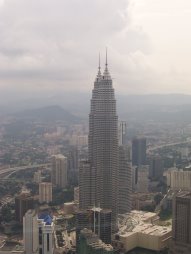
Skyscrapers 'linked with impending financial crashes'
There is an "unhealthy correlation" between the building of skyscrapers and subsequent financial crashes, according to Barclays Capital.
Examples include the Empire State building, built as the Great Depression was under way, and the current world's tallest, the Burj Khalifa, built just before Dubai almost went bust.
China is currently the biggest builder of skyscrapers, the bank said.
India also has 14 skyscrapers under construction.
"Often the world's tallest buildings are simply the edifice of a broader skyscraper building boom, reflecting a widespread misallocation of capital and an impending economic correction," Barclays Capital analysts said
Source BBC News
Examples include the Empire State building, built as the Great Depression was under way, and the current world's tallest, the Burj Khalifa, built just before Dubai almost went bust.
China is currently the biggest builder of skyscrapers, the bank said.
India also has 14 skyscrapers under construction.
"Often the world's tallest buildings are simply the edifice of a broader skyscraper building boom, reflecting a widespread misallocation of capital and an impending economic correction," Barclays Capital analysts said
Source BBC News
World's Most Famous Palindrome
Teaching S1 today in ICT we were doing our Citizenship challenge and one of the groups received Panama as their country. I used this to share an interesting piece of knowledge/trivia with my pupils!
Leigh Mercer published an excellent and world famous palindrome (a sentance or word that reads the same backwards as forwards) in 1948 on the topic of Panama.
A MAN
A PLAN
A CANAL
PANAMA!
Check it, it works!
Leigh Mercer published an excellent and world famous palindrome (a sentance or word that reads the same backwards as forwards) in 1948 on the topic of Panama.
A MAN
A PLAN
A CANAL
PANAMA!
Check it, it works!
Ten Great Predictions
A Happy New Year to everyone.
Here is an excellent BBC article on a man called John Elfreth Watkins who predicted 10 great inventions from over 100 years ago, though he did get a few wrong:
http://www.bbc.co.uk/news/magazine-16444966
Here is an excellent BBC article on a man called John Elfreth Watkins who predicted 10 great inventions from over 100 years ago, though he did get a few wrong:
http://www.bbc.co.uk/news/magazine-16444966
Tuesday, 20 December 2011
NPA Enterprise and Employability at Hamilton Grammar
Very proud of the pupils who have done a fantastic job in the NPA class:
http://local.stv.tv/hamilton/news/28786-enterprising-pupils-impress-with-their-product-ideas/
http://local.stv.tv/hamilton/news/28786-enterprising-pupils-impress-with-their-product-ideas/
Tuesday, 29 November 2011
Apprenticeships at Peter Vardy
Car dealership chain Peter Vardy is the latest firm to commit to taking on trainees following the success of its Apprentice-style recruitment scheme.
Vardy has rolled out its Rookie Academy for a second year and on a bigger scale with up to 20 jobs up for grabs. More than 200 people applied for the 12-week intensive course which last year saw 11 apprentices taken on from the 400 who applied.
Those recruits attended a series of rigorous assessment days consisting of presentations and role play against each other and with chief executive Peter Vardy.
The rookies were trained in every facet of the car selling trade and in March took up sales positions across the seven dealerships throughout Scotland.
Source: The Scotsman
Shell make £11 billion deal with Iraq
Iraq yesterday signed a $17 billion (£11bn) deal with Royal Dutch Shell and Japan’s Mitsubishi to tap natural gas in the south of the country.
The agreement is one of the biggest by the Opec member to develop an energy sector battered by years of neglect and war.
It forms a joint venture to gather, process and market gas from three oil fields in the oil-rich province of Basra. That gas, pumped in conjunction with crude oil, is currently burned off – or flared – due to lack of infrastructure.
The 25-year joint venture is called Basra Gas Company. Iraq will hold a 51 per cent stake, to Royal Dutch Shell’s 44 per cent and Mitsubishi’s 5 per cent holding. The gas will be used mainly for domestic energy needs, but there is also an option for exports.
Iraq’s oil minister, Abdul-Karim Elaibi, hailed the signing as a “historic turn in Iraq’s oil industry”.
Shell chief executive Peter Voser said Iraq is now a “substantial part of Royal Dutch Shell’s portfolio in the Middle East”.
Source: The Scotsman
Scottish Beef Going Down Well in China
One country’s misfortune could turn out to benefit beef producers in this country with a recent delegation from China to the UK stating they were now reluctant to import from Japan following March’s earthquake and subsequent nuclear disaster.
The delegates from Henan Provincial Animal Husbandry Bureau met representatives of the National Beef Association who said that it was now more important than ever for the UK to secure a beef export certificate for China.
Hamish McBean, temporary chairman of the NBA, said it was obvious there was a massive demand for premium beef products although it was equally obvious the visitors wanted their country to become self-sufficient in beef.
Currently China imports from Japan, the USA and Canada and home production would need to double before it became self-sufficient.
Provided the UK could secure the much sought-after export certificate for China, there was, claimed McBean, very clearly a market for the best of British beef.
The Chinese delegates, he added, focused on how they could improve the quality and quantity of their beef production, looking at genetics, feeding and meat processing.
By Andrew Arbuckle (The Scotsman)
Subscribe to:
Posts (Atom)