Monday, 17 September 2012
Company Profiles - Irn Bru
History
Irn-Bru is a Scottish carbonated soft drink, for long advertised as "Scotland's other national drink" (next to Scotch whisky).It is produced in westfield Cumbernauld, North Lanarkshire by A.G. Barr of Glasgow, since moving out of their original Parkhead factory in the mid-1990s, and at a second manufacturing site in Mansfield, England. In addition to being sold throughout the United Kingdom, Barr's Irn-Bru is available throughout the world and can usually be purchased where there is a significant community of people from Scotland. Innovative and sometimes controversial marketing campaigns have kept it as the number one selling soft drink in Scotland, where it competes directly with global brands such as Coca-Cola and Pepsi.
United STATES
Irn-Bru and Diet Irn-Bru have been formulated since 2002 by A.G. Barr plc to meet the regulations for food colouring of the U.S. Foo and Drug Administration (FDA). Ponceau 4R used in the UK formulation is prohibited by the FDA. Barr uses alternative food and drink colourants manufactured by a U.S. company approved by the FDA. The product labelling also meets U.S. labelling standards on nutritional information and bar code. Compliant Irn-Bru is solely imported by Great Scot International in Charlotte, North Carolina, who supplies distributors and retailers throughout the U.S. It is only supplied in 500 mL
By Mark and John


Company Profiles - Starbucks
15 million people in Ethiopa depend on the coffee sector; this generates 60 % of the wealth. So starbucks keep them afloat.
Starbucks helped differentiate Ethiopan coffee from coffees from other countries. It strengths their confidence of the coffee growing and exporters of the country.
This means theres an increasing demand for Ethiopian coffee in the worldwide market.
Increases the income and living stanards of the coffee producers.
Increased the price of coffee.
Starbucks have increased the amount theyre paying for the coffee beans by 60% to help them out.
Through Fairtrade the small-holder families and farmers can get better incomes for their hardwork.
This allows their children a good opportunity to go to school. And hold onto their land.
For every coffee they sell a litle profit goes to the Fair Trade. When other major companies would not.
By Laura, Alanah and Rebecca
Starbucks helped differentiate Ethiopan coffee from coffees from other countries. It strengths their confidence of the coffee growing and exporters of the country.
This means theres an increasing demand for Ethiopian coffee in the worldwide market.
Increases the income and living stanards of the coffee producers.
Increased the price of coffee.
Starbucks have increased the amount theyre paying for the coffee beans by 60% to help them out.
Through Fairtrade the small-holder families and farmers can get better incomes for their hardwork.
This allows their children a good opportunity to go to school. And hold onto their land.
For every coffee they sell a litle profit goes to the Fair Trade. When other major companies would not.
By Laura, Alanah and Rebecca
Company Profiles - Nike
Who are Nike?
Nike is an International Corporation
They make a whole load of sportswear and trainers.
Although they are an American based company, most of their goods are made in sweatshops in developing countries.
Where are the Sweatshops Located?
Most of Nike’s sweatshops are located in the following countries;
South Korea
Vietnam
Taiwan
China
Indonesia
Sweatshops
Within China and Vietnam, the workers in the sweatshops are forbidden from forming independent trade unions.
This helps Nike out as it means there are no groups or organisations fighting for better rights on behalf of the workers.
The Reason For Sweatshops
These sweatshops save Nike a lot of money due to the very lenient labour laws in the chosen countries.
Due to these laws, Nike were able to force 8 year old kids to work a nine hour shift making trainers and goods for the European market.
Nike are currently working alongside the governments of these countries to make labour laws stricter.
By Craig
Yamaha in India
Yamaha in India
By Nicky and Cara
Benefits for workforce of Yamaha in India
To better relate to the local people Yamaha are planning to produce scooters which are very popular in India. This is because their rivals have abandoned production leaving many people without transport.
This also allows the workforce to earn more money as profits are increased
costs
The only cost is the small increase in pollution and there MAY be some poor working conditions but this is made acceptable as the scooters are epic!!!
Yamaha
Yamaha is a Japanese corporation who produce many different products including:
Motorbikes, scooters, guitars, drums, pianos, keyboards and recording technology. They are very diverse in their productions.
By Nicky and Cara
Benefits for workforce of Yamaha in India
To better relate to the local people Yamaha are planning to produce scooters which are very popular in India. This is because their rivals have abandoned production leaving many people without transport.
This also allows the workforce to earn more money as profits are increased
costs
The only cost is the small increase in pollution and there MAY be some poor working conditions but this is made acceptable as the scooters are epic!!!
Yamaha
Yamaha is a Japanese corporation who produce many different products including:
Motorbikes, scooters, guitars, drums, pianos, keyboards and recording technology. They are very diverse in their productions.
India to allow foreign supermarkets in
A key political ally is to meet on Tuesday to decide on whether or not to withdraw from the Indian government. The Trinamool Congress party has demanded that the government scrap its decision to open up India's retail sector to global supermarket chains.
India's opposition parties have called for a nationwide strike on Thursday to protest the decision. Delhi's plan is aimed at reviving a flagging economy, but small shops fear they will be put out of business.
Last year, the government was forced to suspend a similar plan amid protests.
International firms such as Walmart and Tesco will now be able to buy up to a 51% stake in multi-brand retailers. Analysts say the government has reintroduced the measure in an effort to revive a flagging economy.
Prime Minister Manmohan Singh said: "I believe that these steps will help strengthen our growth process and generate employment in these difficult times."
India's opposition parties have called for a nationwide strike on Thursday to protest the decision. Delhi's plan is aimed at reviving a flagging economy, but small shops fear they will be put out of business.
Last year, the government was forced to suspend a similar plan amid protests.
International firms such as Walmart and Tesco will now be able to buy up to a 51% stake in multi-brand retailers. Analysts say the government has reintroduced the measure in an effort to revive a flagging economy.
Prime Minister Manmohan Singh said: "I believe that these steps will help strengthen our growth process and generate employment in these difficult times."
Boots expands into China
Alliance Boots, one of Europe's biggest pharmacy chains, has agreed a deal to buy a stake in a Chinese firm as it looks to expand in the country.
Boots said it will acquire a 12% stake in Nanjing Pharmaceutical Company Limited, for 560m yuan ($88m; £56m).
China, the world's second-largest economy, is home to more than 1.3 billion people, making it an attractive destination for foreign firms. Nanjing is the fifth-biggest pharmaceutical distributor in China.
Boots, which first entered the Chinese market in 2008, said that it was aiming at a 20-30% share of the Chinese pharmaceutical distribution market.
Source: BBC Business News
Boots said it will acquire a 12% stake in Nanjing Pharmaceutical Company Limited, for 560m yuan ($88m; £56m).
China, the world's second-largest economy, is home to more than 1.3 billion people, making it an attractive destination for foreign firms. Nanjing is the fifth-biggest pharmaceutical distributor in China.
Boots, which first entered the Chinese market in 2008, said that it was aiming at a 20-30% share of the Chinese pharmaceutical distribution market.
Source: BBC Business News
Monday, 14 May 2012
Stay connected in the air
Apparently it has been going on for a decade, but for the vast majority of travellers once you are airborne the world of the internet is a no go. However that is about to change.
UK telecommunications firm Immarsat and US giant Honeywell are developing new satellite links to improve connectivity while in the air, ensuring people can stay in touch on the go and in the air.
For the full story go to BBC Technology news:
http://www.bbc.co.uk/news/technology-18021468
UK telecommunications firm Immarsat and US giant Honeywell are developing new satellite links to improve connectivity while in the air, ensuring people can stay in touch on the go and in the air.
For the full story go to BBC Technology news:
http://www.bbc.co.uk/news/technology-18021468
Don't lie on your CV
Looks like Yahoo's Scott Thompson has become one of the biggest ever casualties of lying on his CV. He apparently put down he had studied Computer Science at a college in 1979, but back then the course didn't exist.
Thompson is CEO at Yahoo and only joined in September 2011, after a spell at PayPal.
It is worth noticing that in The Apprentice UK, eventual winner Lee McQueen was less than honest over his own college days when he had put down he was at college for 3 years when in fact he had only started the course and left after a matter of weeks.
Despite this he was still hired, something that perhaps shows a rare lack of judgement by Lord Sugar. Embelishments are probably part of the game, but making things up or taking credit for other peoples work should not be rewarded at all.
I will look to see if I can find some other high profile cases of people being undone by their own CV.
Thompson is CEO at Yahoo and only joined in September 2011, after a spell at PayPal.
It is worth noticing that in The Apprentice UK, eventual winner Lee McQueen was less than honest over his own college days when he had put down he was at college for 3 years when in fact he had only started the course and left after a matter of weeks.
Despite this he was still hired, something that perhaps shows a rare lack of judgement by Lord Sugar. Embelishments are probably part of the game, but making things up or taking credit for other peoples work should not be rewarded at all.
I will look to see if I can find some other high profile cases of people being undone by their own CV.
Monday, 23 April 2012
Chinese owned Volvo ready to begin car production
Manufacturing in China, the world's fastest growing market, is every carmaker's dream.
Making the dream come come true is far from easy, however, as Chinese-owned Volvo Cars has discovered.
Nearly two years have passed since Geely paid $1.8bn for Ford's Swedish subsidiary, in a deal said to be the biggest acquisition of a non-Chinese rival by a Chinese carmaker.
Last year, Volvo sold more than 100,000 cars in China, 24% more than in 2010.
Yet the Chinese authorities still see Volvo as a foreign player, which means it cannot make cars there.
"We are being treated as a foreign company," observes Stefan Jacoby, Volvo's chief executive.
"Obviously we cannot hide that we are a Swedish registered company, so we'll need to enter into a joint venture in China in order to comply with Chinese automotive regulations."
For the full article read here: http://www.bbc.co.uk/news/business-17190800
Making the dream come come true is far from easy, however, as Chinese-owned Volvo Cars has discovered.
Nearly two years have passed since Geely paid $1.8bn for Ford's Swedish subsidiary, in a deal said to be the biggest acquisition of a non-Chinese rival by a Chinese carmaker.
Last year, Volvo sold more than 100,000 cars in China, 24% more than in 2010.
Yet the Chinese authorities still see Volvo as a foreign player, which means it cannot make cars there.
"We are being treated as a foreign company," observes Stefan Jacoby, Volvo's chief executive.
"Obviously we cannot hide that we are a Swedish registered company, so we'll need to enter into a joint venture in China in order to comply with Chinese automotive regulations."
For the full article read here: http://www.bbc.co.uk/news/business-17190800
Global Car Production Threatened by a break in the Supply Chain
When a fire in the small town of Marl in the west of Germany closed down an obscure chemical plant on 31 March, it barely made headlines.
Two people died and that was a personal tragedy for their families and friends, but the shock waves did not resonate far beyond.
Except, it turns out, to the other side of the Atlantic - in Detroit, Michigan.
So tight is the global car industry's supply chain that one break in a small link threatens the lot.
About three weeks after the fire, executives from the world's biggest auto-makers and their suppliers have met with furrowed brows to take stock of the implications of the fire.
And they are serious.
It turns out that the braking and the fuel systems of cars depend on a resin called PA-12.
And PA-12 is made out of an inelegantly named chemical: cyclododecatriene, or CDT.
Evonik Industries' plant in Germany was responsible for a good chunk of the world's supply - one estimate put it between a quarter and a half.
From BBC Business News. Read the article in full here: http://www.bbc.co.uk/news/business-17769466
Two people died and that was a personal tragedy for their families and friends, but the shock waves did not resonate far beyond.
Except, it turns out, to the other side of the Atlantic - in Detroit, Michigan.
So tight is the global car industry's supply chain that one break in a small link threatens the lot.
About three weeks after the fire, executives from the world's biggest auto-makers and their suppliers have met with furrowed brows to take stock of the implications of the fire.
And they are serious.
It turns out that the braking and the fuel systems of cars depend on a resin called PA-12.
And PA-12 is made out of an inelegantly named chemical: cyclododecatriene, or CDT.
Evonik Industries' plant in Germany was responsible for a good chunk of the world's supply - one estimate put it between a quarter and a half.
From BBC Business News. Read the article in full here: http://www.bbc.co.uk/news/business-17769466
Wednesday, 18 April 2012
Futuristic plans from Japan and Russia
Some really interesting articles on the future of travel and space.
London to Tokyo in 90 minutes
http://www.cnngo.com/explorations/life/london-tokyo-90-minutes-721053
Russia's space hotel
http://www.cnngo.com/explorations/life/russians-unveil-space-hotel-678591
London to Tokyo in 90 minutes
http://www.cnngo.com/explorations/life/london-tokyo-90-minutes-721053
Russia's space hotel
http://www.cnngo.com/explorations/life/russians-unveil-space-hotel-678591
Japan's Space Elevator
Japanese firm Obayashi Corporation are planning to take us to space via an elevator, just like the one envisaged by sci-fi luminaries such as Sir Arthur C. Clarke.
The 36,000-kilometer high, 200-kph lift will be ready by 2050, and will take passengers a tenth of the way to the moon.
The space elevator will 30 people and transport them using carbon nanotubes on the week long journey to a “terminal station,”.
The terminal station will house laboratories and living space, presumably enough for people to stretch their legs and gawp at the blackness, before hopping back inside for the week-long return leg.
For the full article read here: http://www.cnngo.com/explorations/escape/japan-plans-space-elevator-2050-539598
The 36,000-kilometer high, 200-kph lift will be ready by 2050, and will take passengers a tenth of the way to the moon.
The space elevator will 30 people and transport them using carbon nanotubes on the week long journey to a “terminal station,”.
The terminal station will house laboratories and living space, presumably enough for people to stretch their legs and gawp at the blackness, before hopping back inside for the week-long return leg.
For the full article read here: http://www.cnngo.com/explorations/escape/japan-plans-space-elevator-2050-539598
New product development - Google Project Glass
Google's long awaited sci-fi glasses are on the way. The product is called Project Glass and involves users wearing special digital and wifi glasses which will relay lots of up to date information to the wearer such as translating place names into languages, giving directions, identifying wear certain products are being sold, or even helping you find a good restaurant or hotel.
The glasses may well end up playing music and even offer communication such as mobile phone and internet/email in the future.
It really could be a revolutionary product, which could even be reduced in future to contacts as some people have said they don't want to wear big glasses.
It has the whiff of the movie Minority Report about it, which had specialially targetted adverts playing for consumers as they walked by and their retina was scanned.
The future may well be here!
Read more here:
http://www.bbc.com/news/technology-17618495
The glasses may well end up playing music and even offer communication such as mobile phone and internet/email in the future.
It really could be a revolutionary product, which could even be reduced in future to contacts as some people have said they don't want to wear big glasses.
It has the whiff of the movie Minority Report about it, which had specialially targetted adverts playing for consumers as they walked by and their retina was scanned.
The future may well be here!
Read more here:
http://www.bbc.com/news/technology-17618495
Friday, 6 April 2012
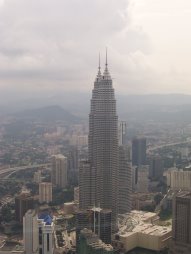
Pearl Oriental Tower - Shanghai

Shanghai is called the Paris of the East and is possibly the most international of all Chinese cities.
Thursday, 5 April 2012
The Future of China and infrastructure
Some interesting things I have noticed on my trip to China so far. One that will have a huge impact on the global economy is something that is perhaps unexpected. A decade ago entrepreneurs like Jim Rogers and other experts where confidently predicting that learning Cantonese or Mandarin where going to be key for the businessmen and women of the 21st Century or as we perhaps should refer to it as the 'Pacific' century.
However, with the opening up of China and the rapid urbanisation and modernisation of its economy the reverse is actually happening. In Shanghai and many other mega cities in China learning English in primary school has now become compulsory. Within 20 years everyone under the age of 30 will speak at least some English.
What will the impact be? Tourism is taking off in a big way and so is Business travel. For the Chinese to offer world class services, which in many cases they do already, they will now add that most important piece of soft infrastructure: language.
China has the road, rail, air, sea, energy and telecommunications links either in place just now, being upgraded or being planned. This last piece of the jigsaw could help China challenge the USA in becoming the world's number one economy.
English became the language of business during the 1800s and 1900s. The 21st century was headed for a Blade Runner style mix of Hispanic and the Orient. However, Perhaps in the future the language of Earth will be English? It was once earmarked for demise due to Spanish and Mandarin being the languages of the future, but as we are witnessing now in China, the Chinese can't wait for the future and want to be number one, now.
Sent from my iPad
However, with the opening up of China and the rapid urbanisation and modernisation of its economy the reverse is actually happening. In Shanghai and many other mega cities in China learning English in primary school has now become compulsory. Within 20 years everyone under the age of 30 will speak at least some English.
What will the impact be? Tourism is taking off in a big way and so is Business travel. For the Chinese to offer world class services, which in many cases they do already, they will now add that most important piece of soft infrastructure: language.
China has the road, rail, air, sea, energy and telecommunications links either in place just now, being upgraded or being planned. This last piece of the jigsaw could help China challenge the USA in becoming the world's number one economy.
English became the language of business during the 1800s and 1900s. The 21st century was headed for a Blade Runner style mix of Hispanic and the Orient. However, Perhaps in the future the language of Earth will be English? It was once earmarked for demise due to Spanish and Mandarin being the languages of the future, but as we are witnessing now in China, the Chinese can't wait for the future and want to be number one, now.
Sent from my iPad
Canton Tower, Guangzhou

It stands at 600 metres high. Which is really, really,tall!
Wednesday, 28 March 2012
James Cameron Dives to Deepest Part of the Ocean Inside the Mariana Trench
Film-maker James Cameron's exploration to the bottom of the Pacific Ocean.
New product development - China straddling bus
A great inventive idea by Chinese engineers in order to solve traffic congestion.
Wednesday, 21 March 2012
STEM Ambassador Event

Tuesday, 20 March 2012

Monday, 19 March 2012
New Business Travel Blog
I have done a fair bit of globetrotting over the last 7 years and I have made full use of the time to visit some interesting locations for Business Education.
I have decided to post pictures, text and business information about my travels on a new blog:
http://mrmcgowanbusinesstravel.blogspot.co.uk/
Hoepfully it will help students and learners see real life industry in action.
I have decided to post pictures, text and business information about my travels on a new blog:
http://mrmcgowanbusinesstravel.blogspot.co.uk/
Hoepfully it will help students and learners see real life industry in action.
Saturday, 17 March 2012
SBEA Mini Conference
Delivering podcasting workshop to delegates.
Adam Stevenson from SQA spoke about the new qualifications. Great news for Higher Admin & Business Mgt that assignments are now going to be included.
Sent from my iPhone
Adam Stevenson from SQA spoke about the new qualifications. Great news for Higher Admin & Business Mgt that assignments are now going to be included.
Sent from my iPhone
Thursday, 15 March 2012
Mock Interviews
Senior pupils underwent mock interviews today as part of enrichment and NPA Enterprise & Employability.
Our interviewers were employers from a range of industries and put our young people through their paces.
Feedback was highly positive, and the vast majority of pupils enjoyed the process. As Helen Salt said: "it's better to make mistakes in a mock interview than in a real one".
Our next step is to aim high and try conduct a whole year group mock interview event.
The more experience our pupils can get the better!
Sent from my iPhone
Our interviewers were employers from a range of industries and put our young people through their paces.
Feedback was highly positive, and the vast majority of pupils enjoyed the process. As Helen Salt said: "it's better to make mistakes in a mock interview than in a real one".
Our next step is to aim high and try conduct a whole year group mock interview event.
The more experience our pupils can get the better!
Sent from my iPhone
Wednesday, 14 March 2012


Tuesday, 13 March 2012
Subscribe to:
Posts (Atom)